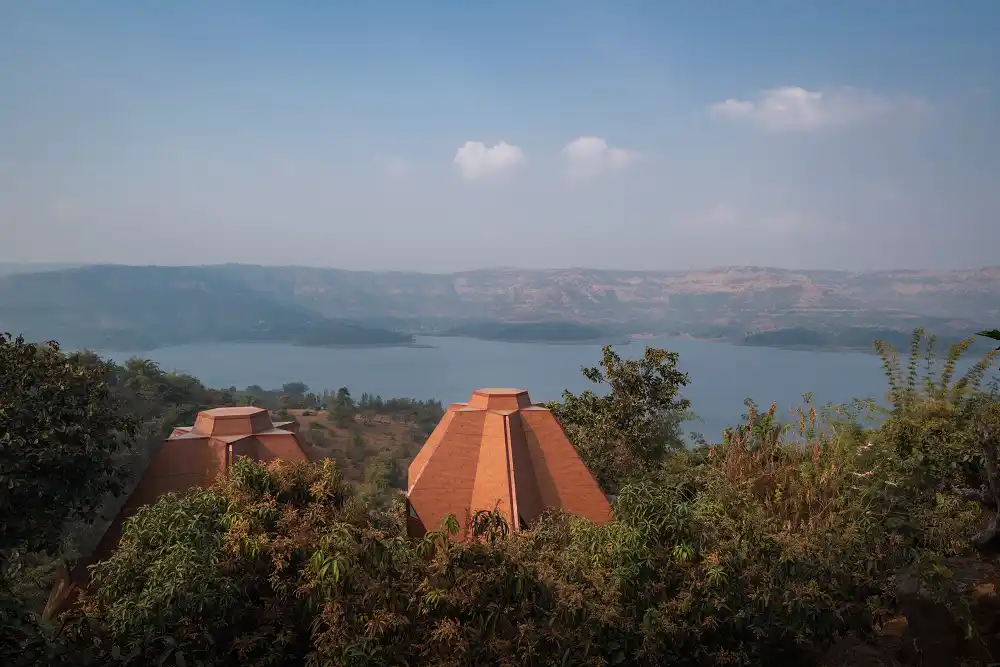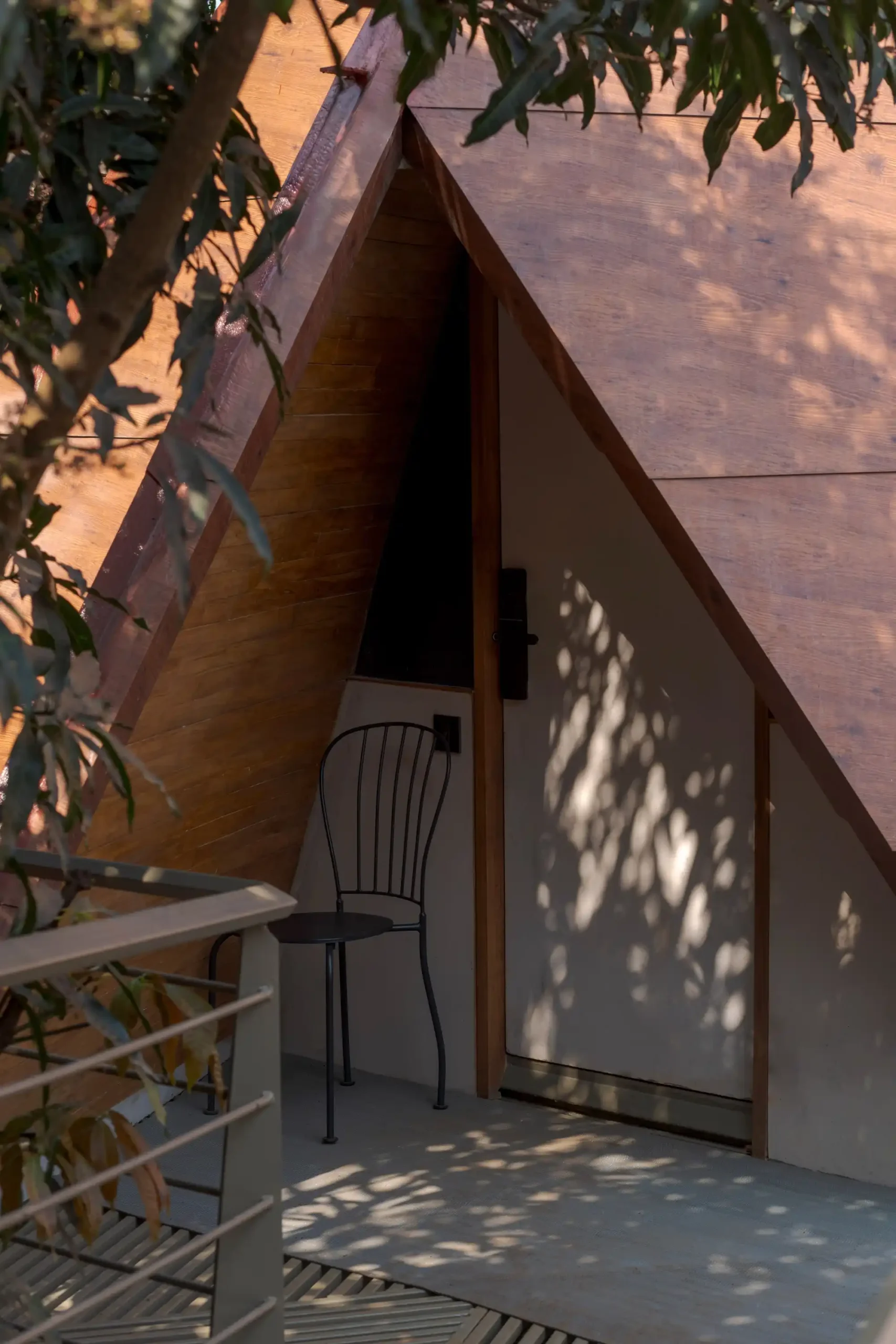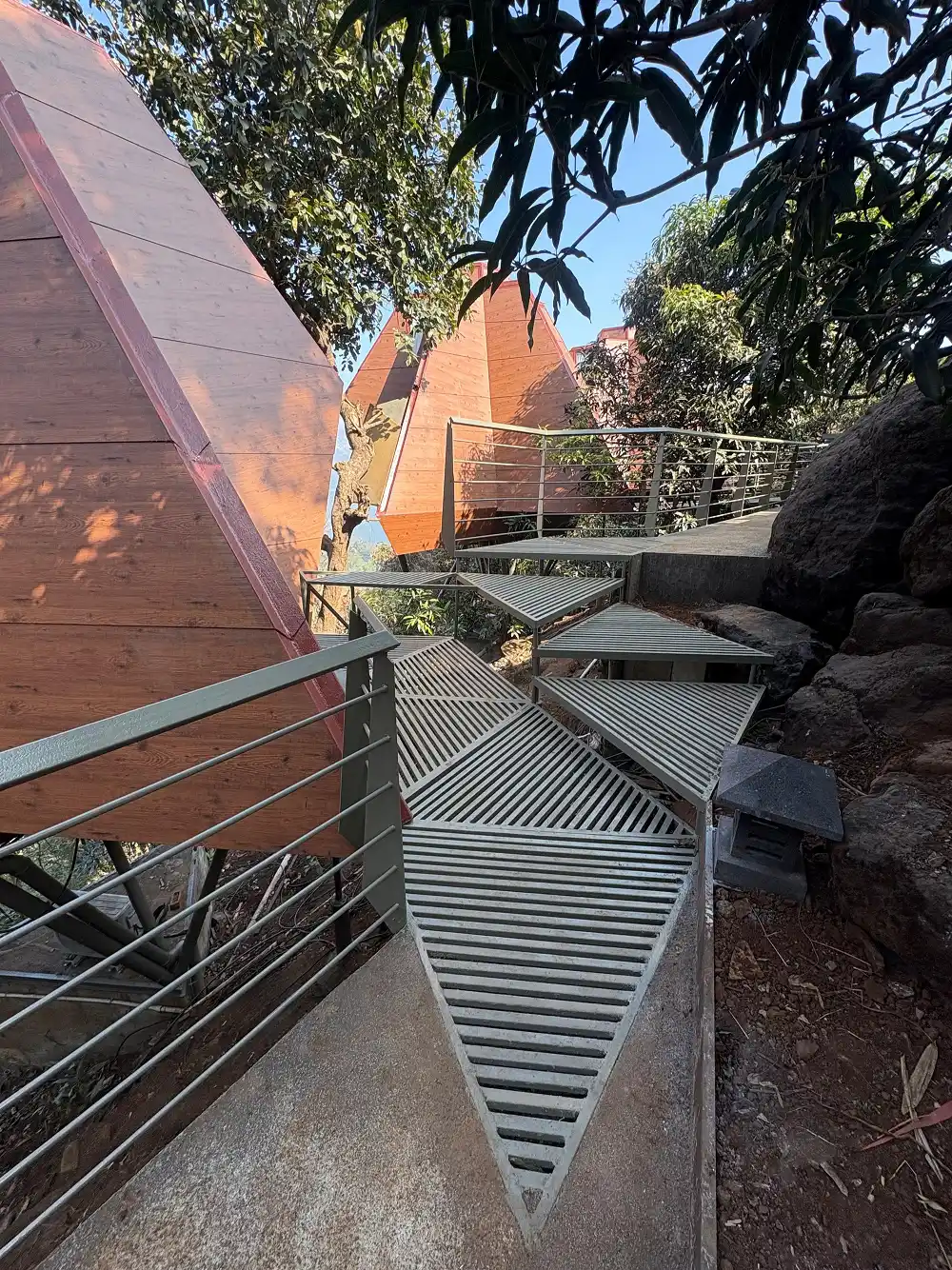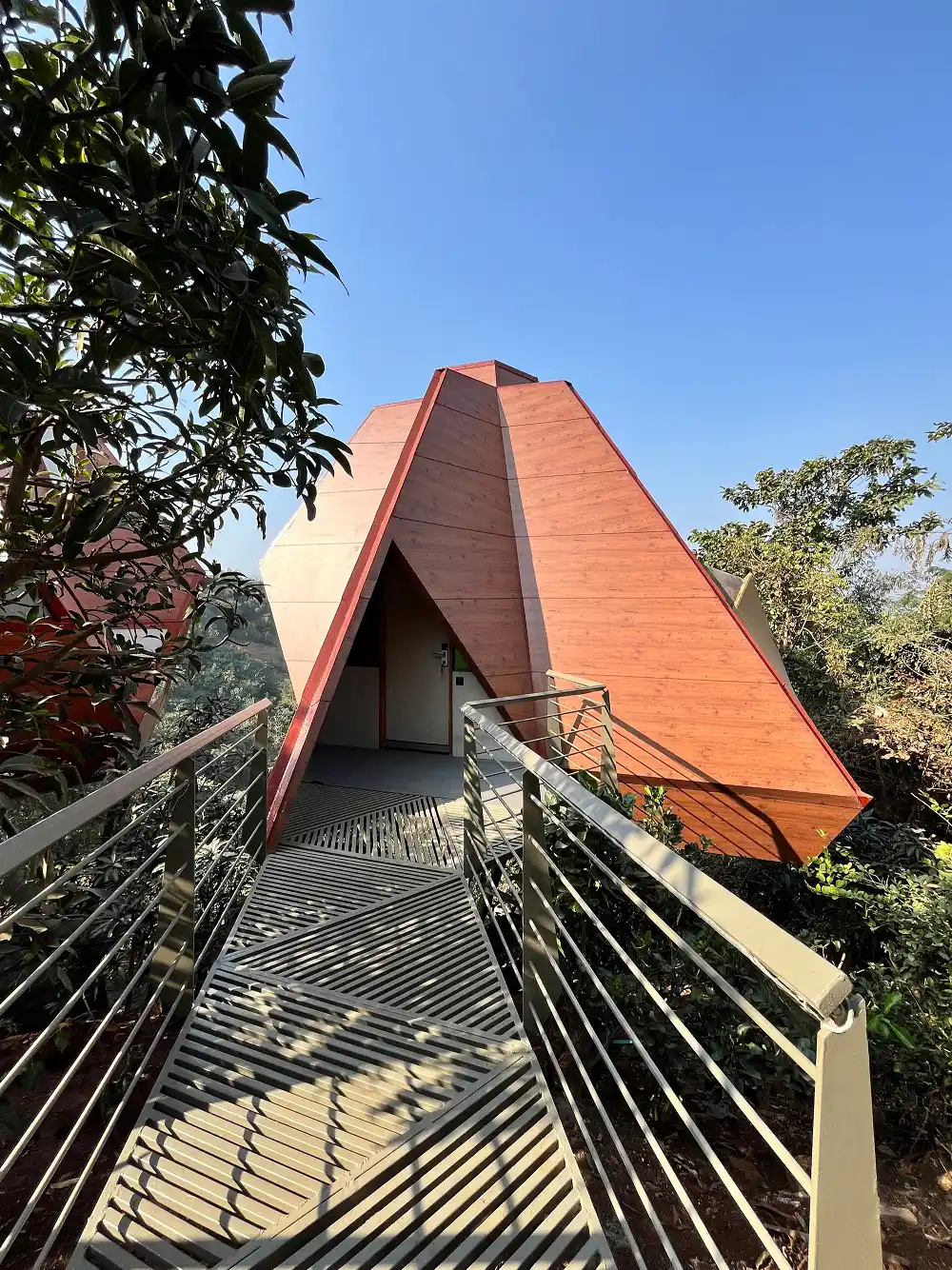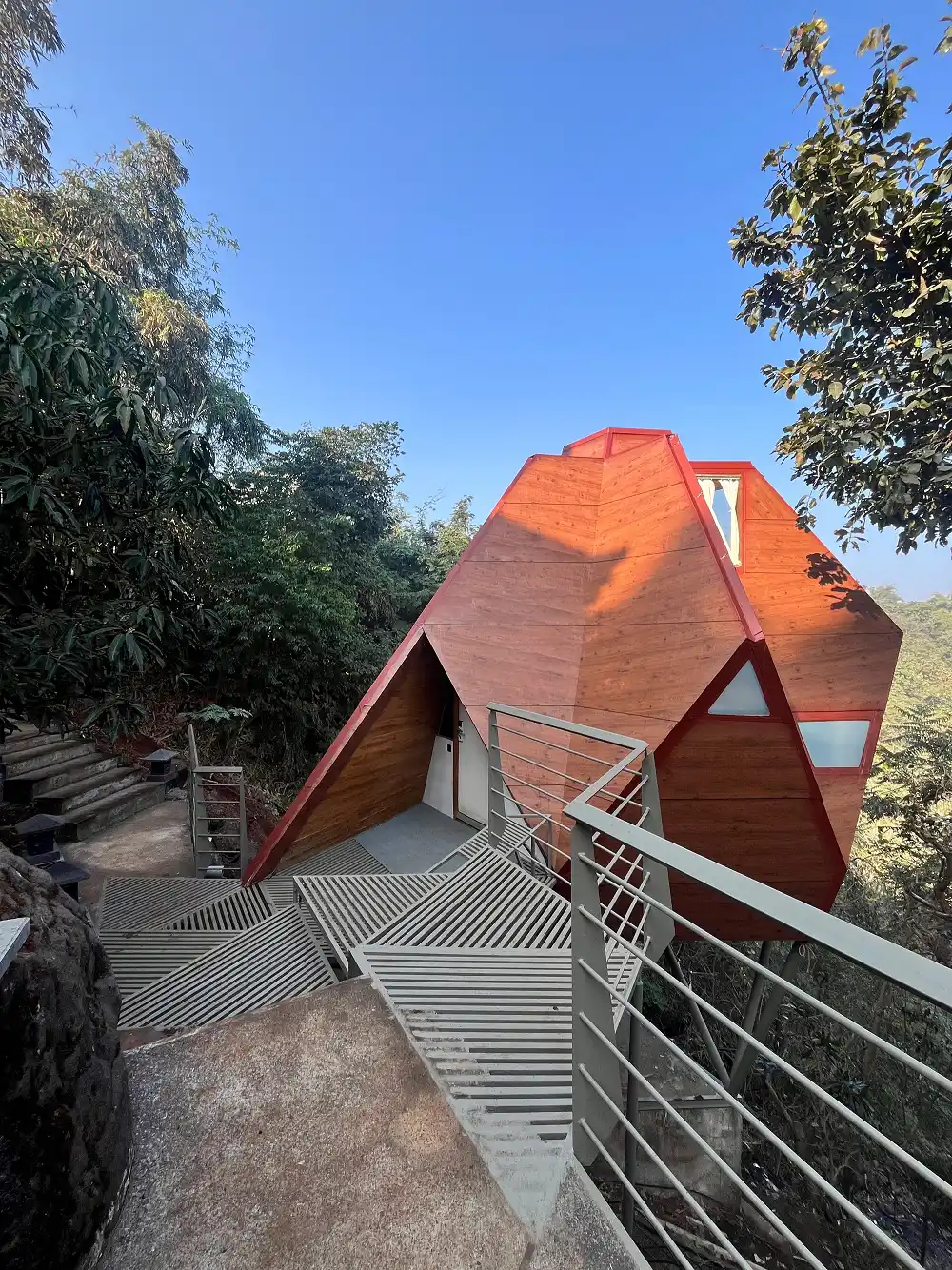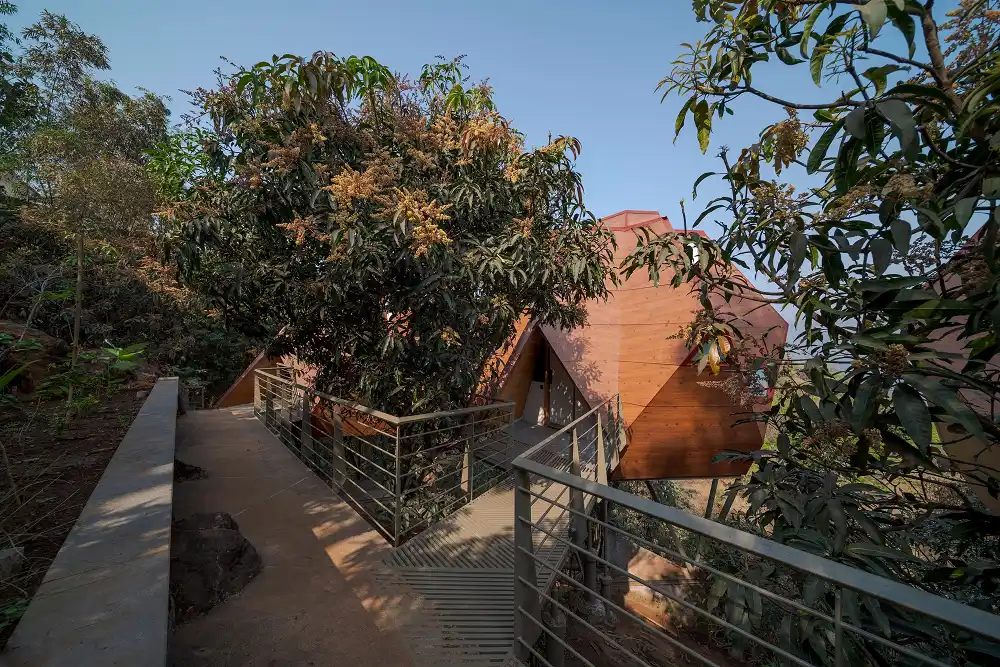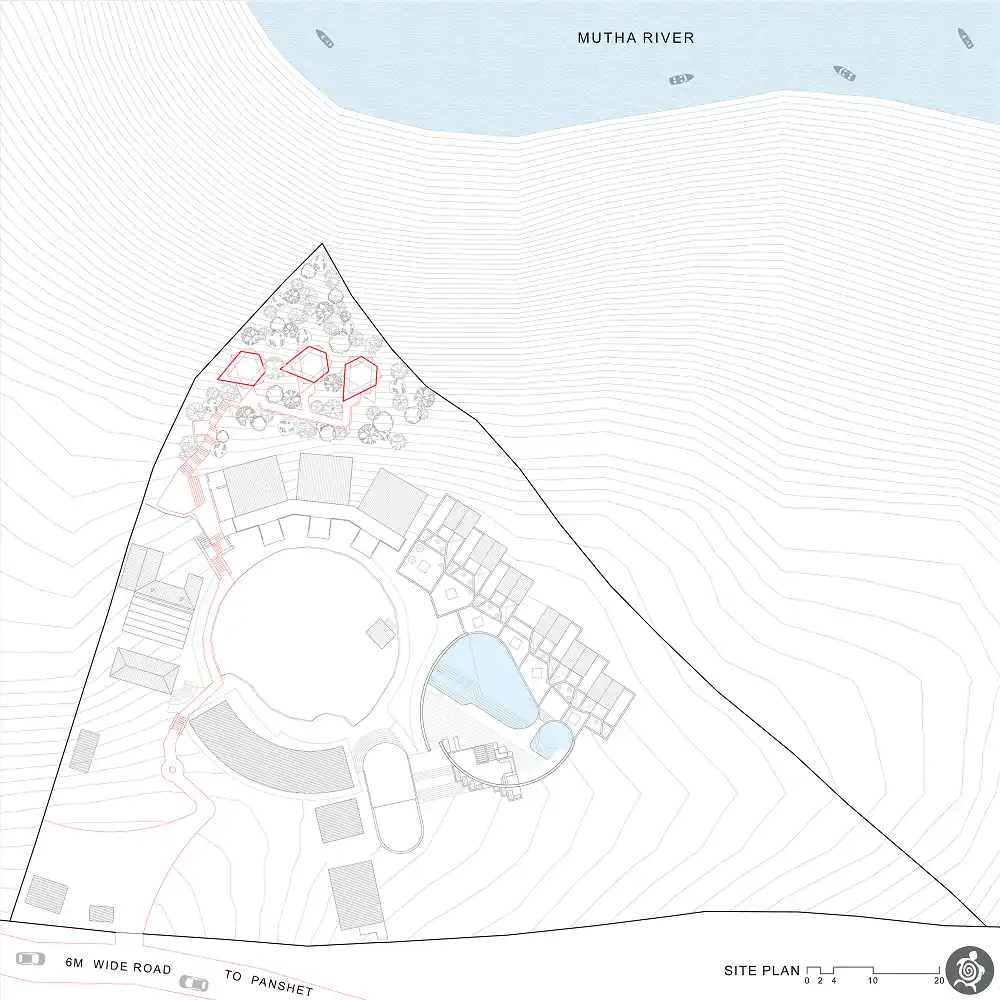
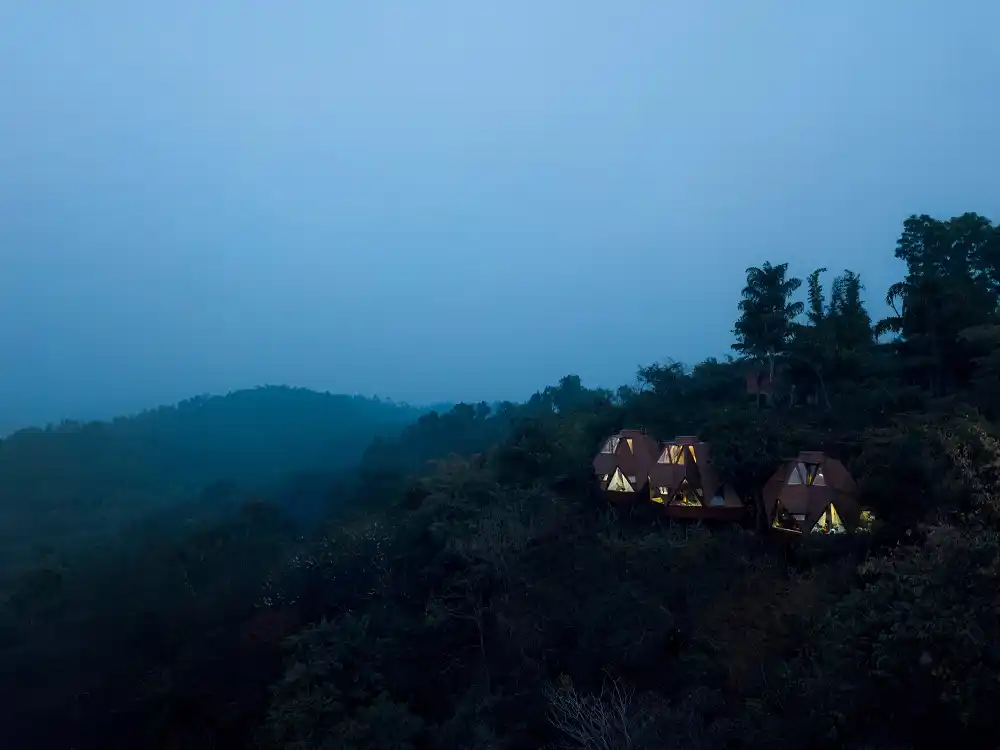
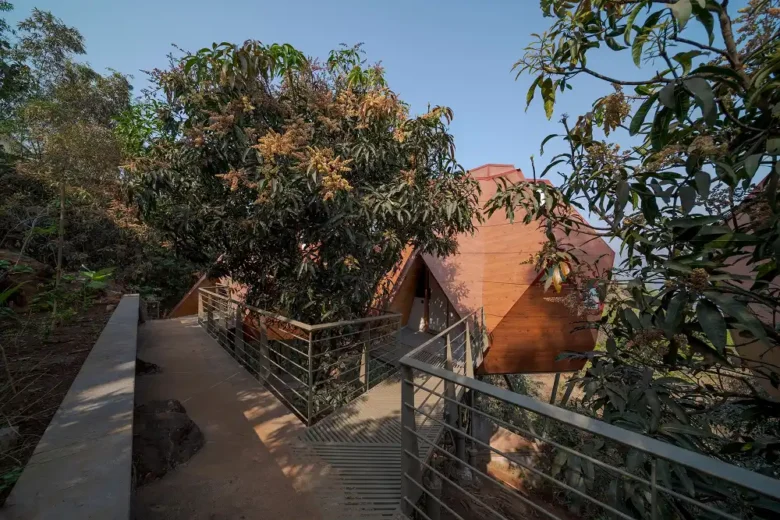
The project was initially envisioned as a treehouse. However, after carefully studying the structural capacity of the surrounding trees, the architects decided to rethink the concept. Instead of relying on the trees as structural supports, the cabins were carefully positioned among them, minimizing intervention to the natural environment.
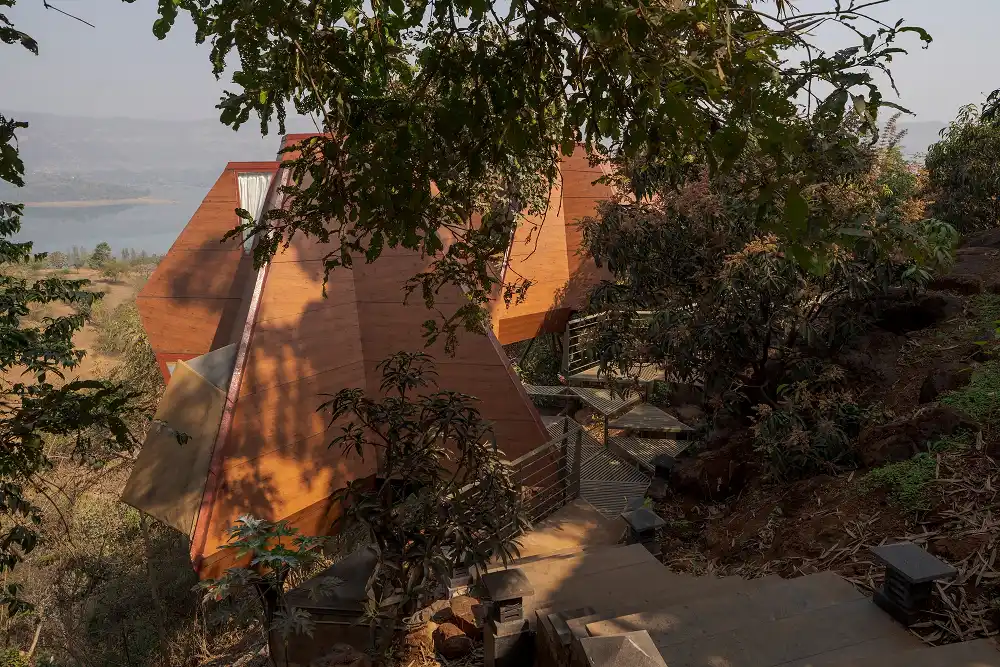
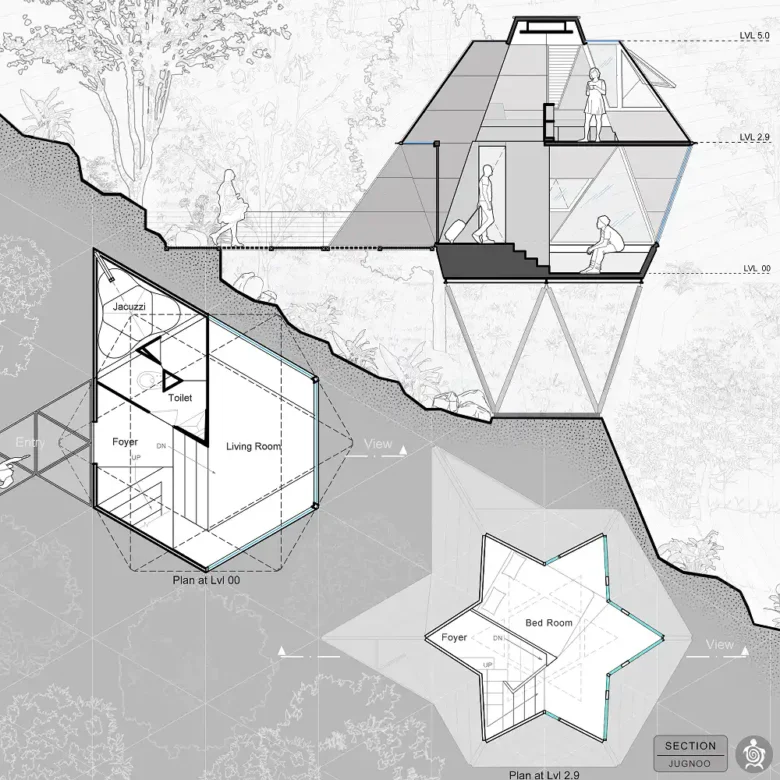
This strategy not only preserved the site’s ecology but also created an immersive experience for visitors, allowing them to feel completely surrounded by the forest. The building touches the ground at only a few points, preserving the existing topography as much as possible.
Project Details
Project Subject: Cabins & Lodges
Architect: PMA madhushala
Area: 35 m²
Year: 2026
Photos: Onil Shah
From Triangle to Tetrahedron: The Search for a Unique Form
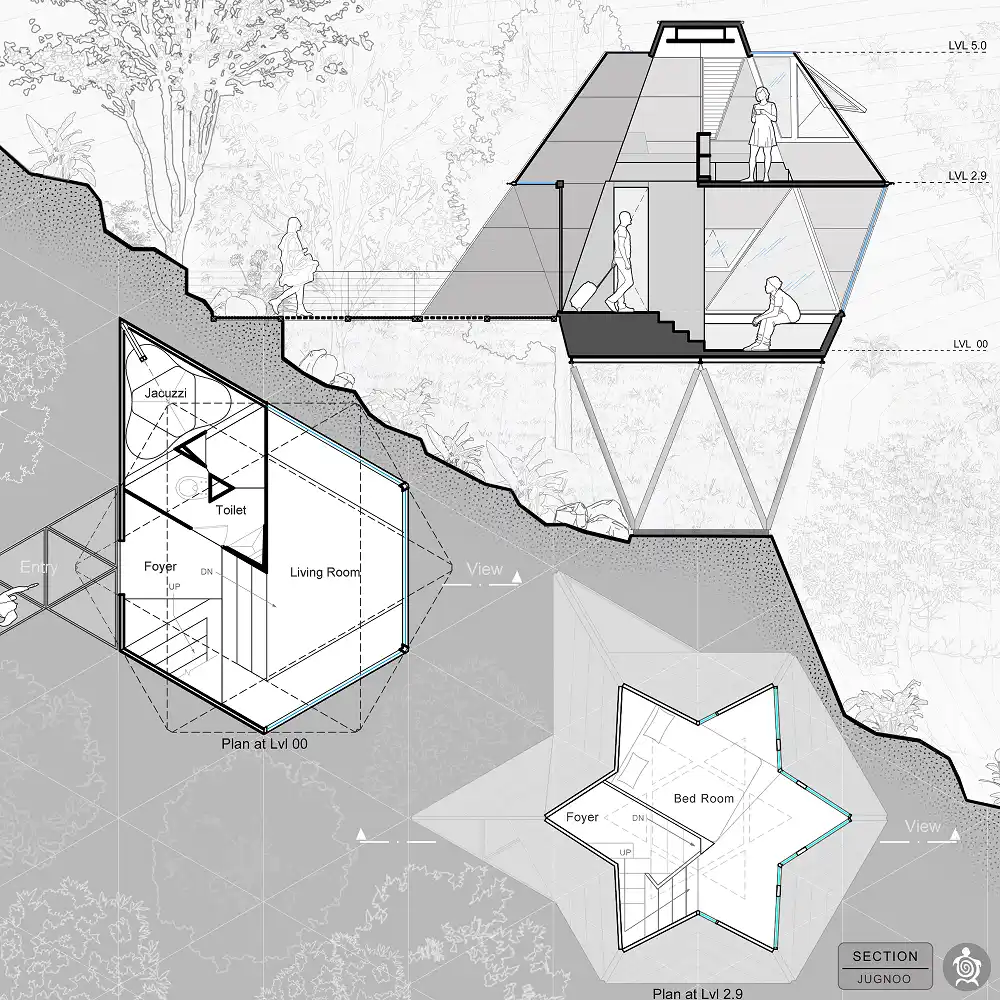
The design process of Jugnoo Cabin began with a simple geometric investigation. The architects explored triangular layouts as a way to reduce the building footprint on the steep terrain.
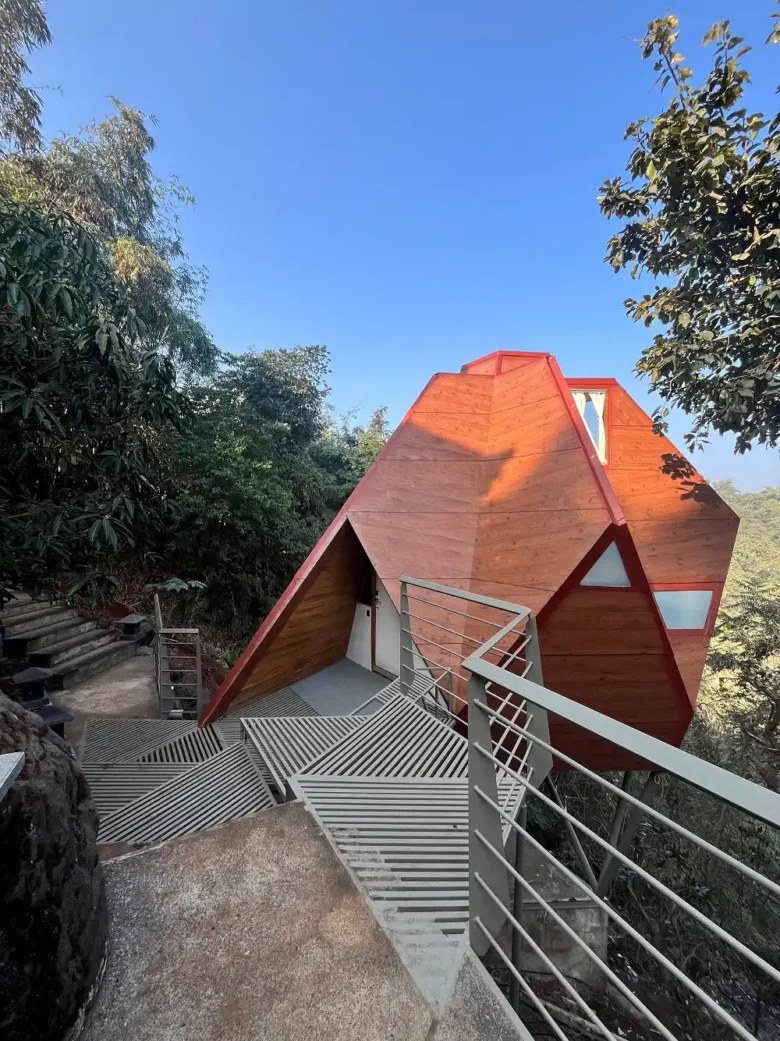
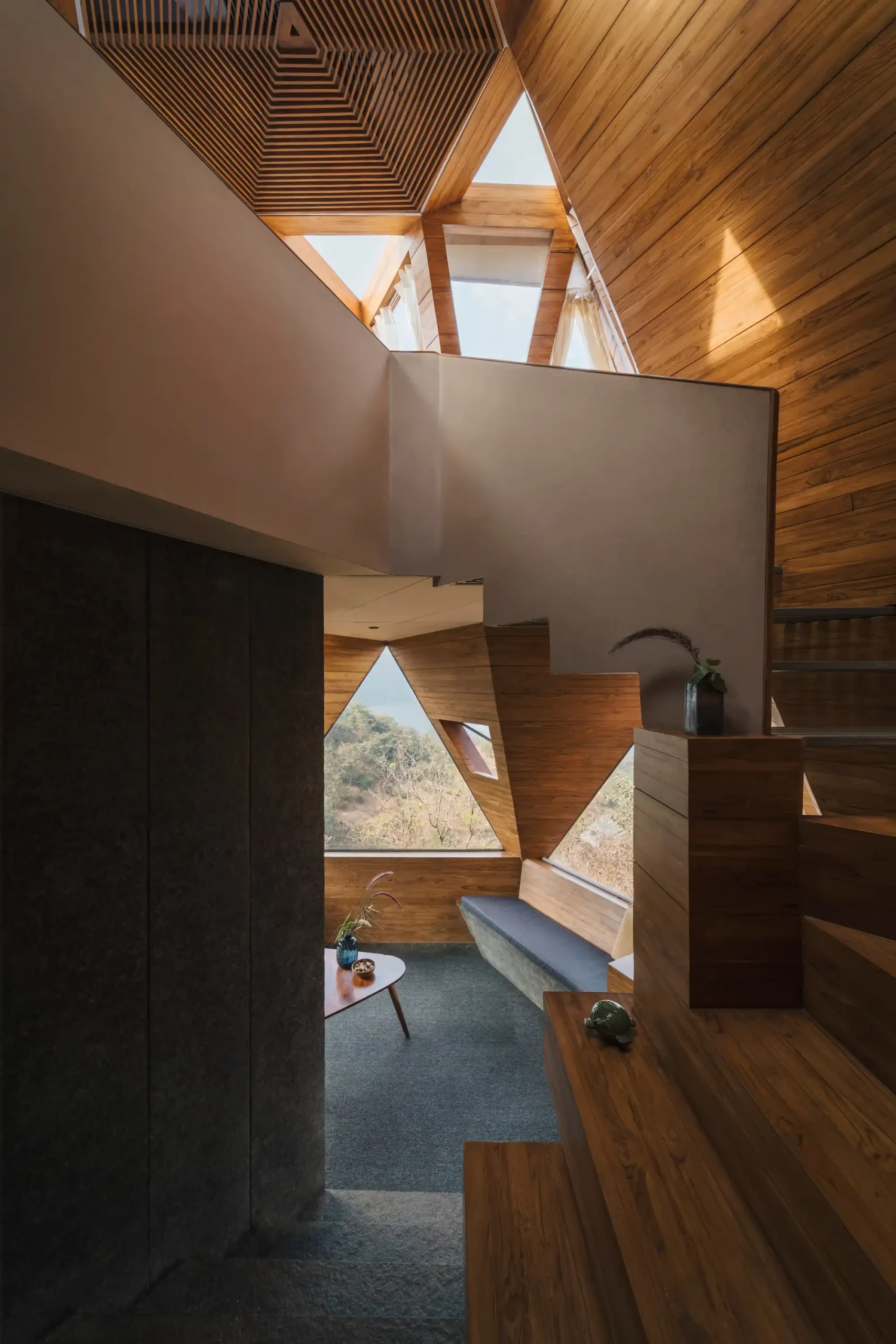
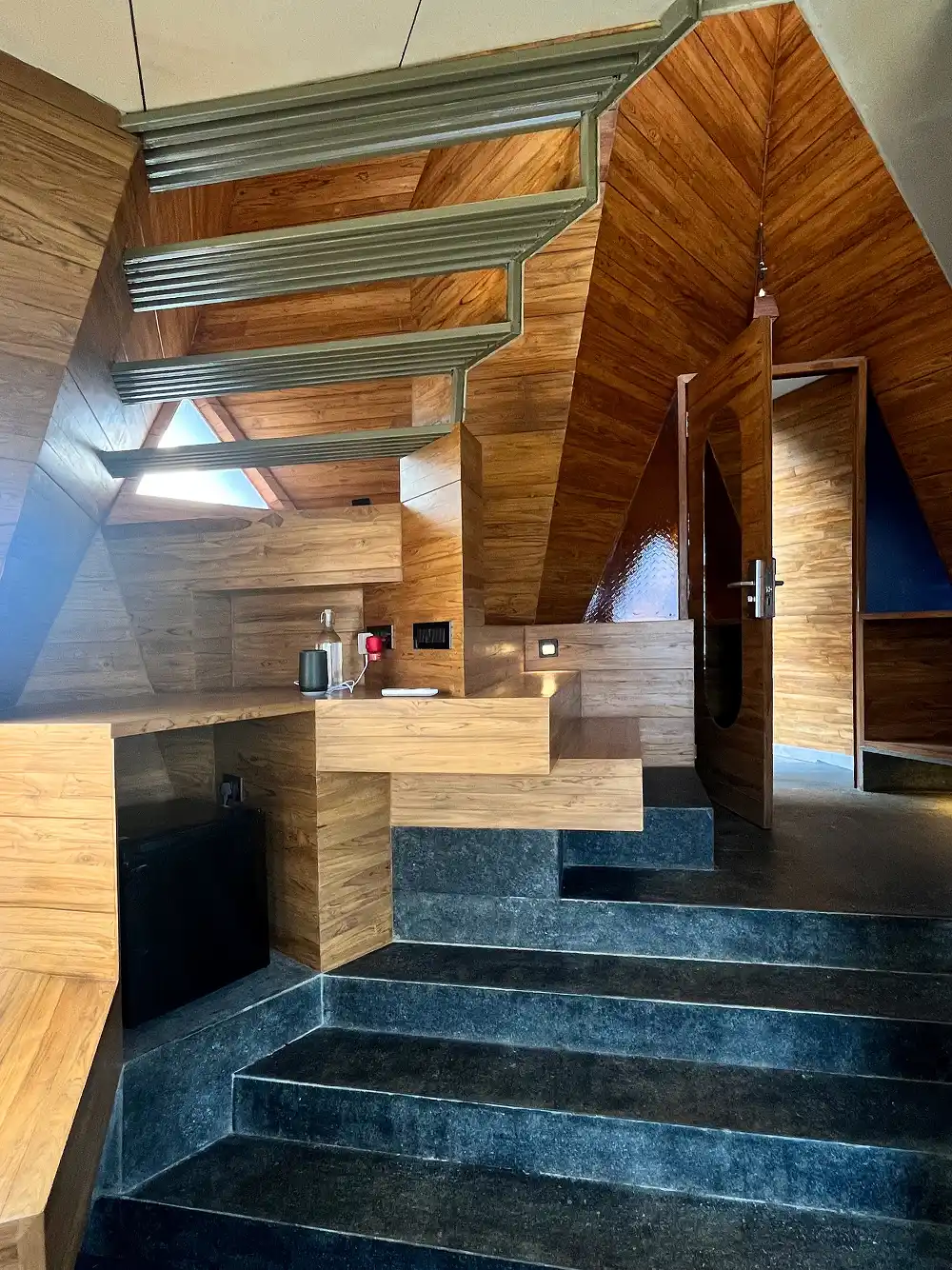
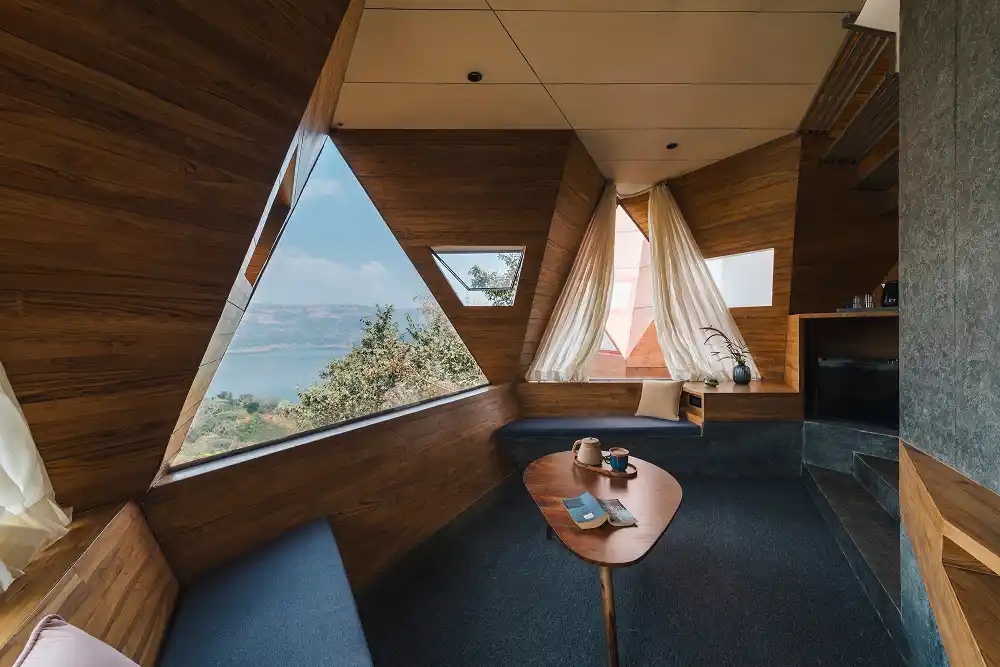
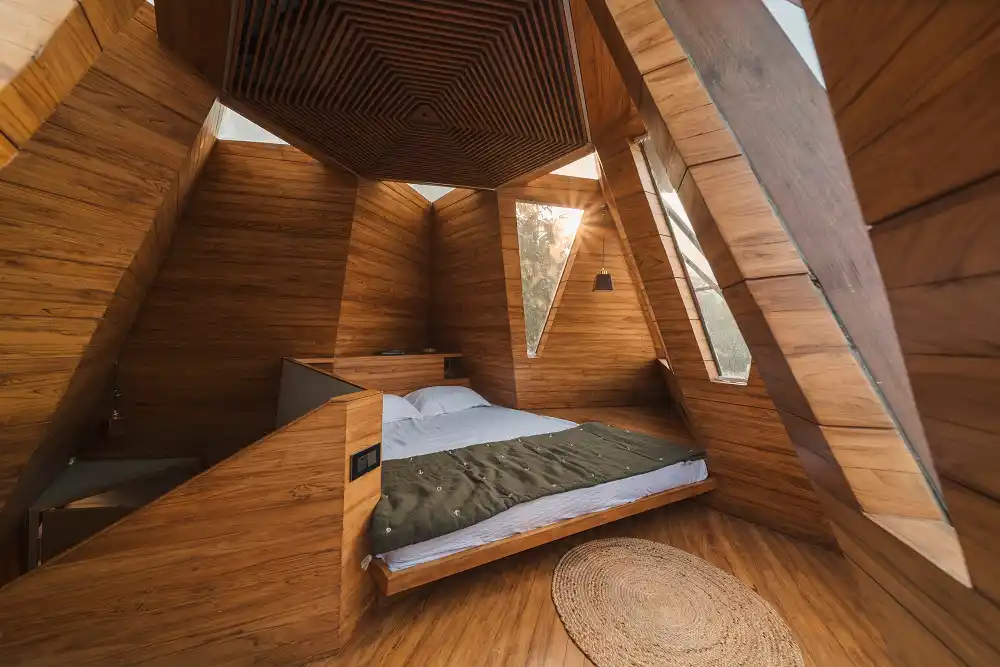
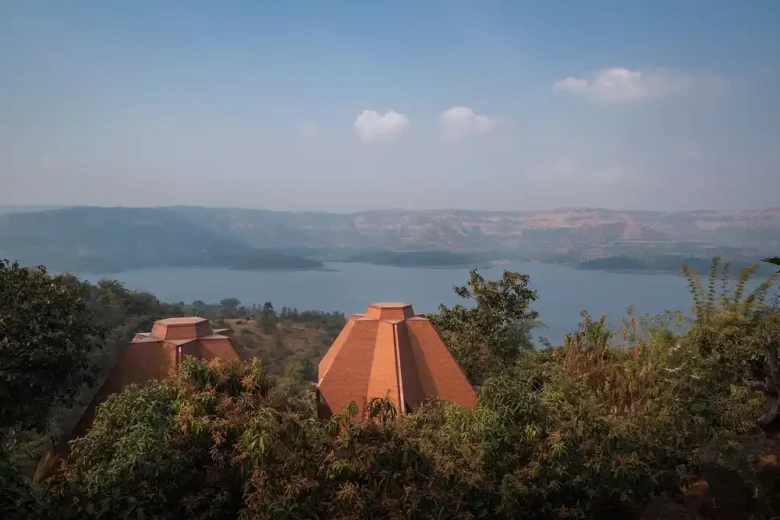
This exploration gradually evolved into a hexagonal plan and eventually into a three-dimensional tetrahedral form that defines the project today. The lower level contains a hexagonal living area, while the upper floor features a compact, star-shaped bedroom.
With a base width of only 2.7 meters, every dimension was carefully optimized to maximize functionality while maintaining a compact footprint. The result is a small yet highly expressive structure that delivers a memorable spatial experience.
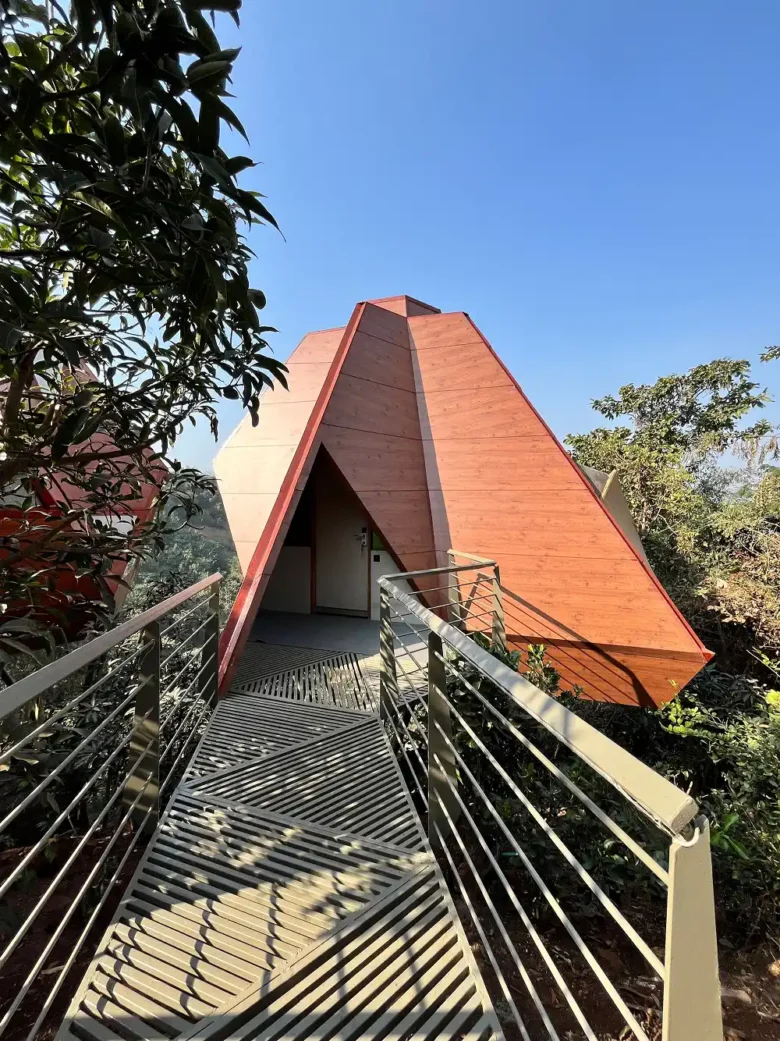
This geometric and experimental approach is characteristic of PMA madhushala’s work. In Jugnoo Cabin, however, it takes on a more sculptural and iconic expression, transforming the building into a distinctive architectural landmark.
Craftsmanship and Local Construction at the Core
One of the most fascinating aspects of the project is its construction process. Due to the site’s complexity and the difficulty of obtaining precise measurements, many design decisions were made directly on-site.
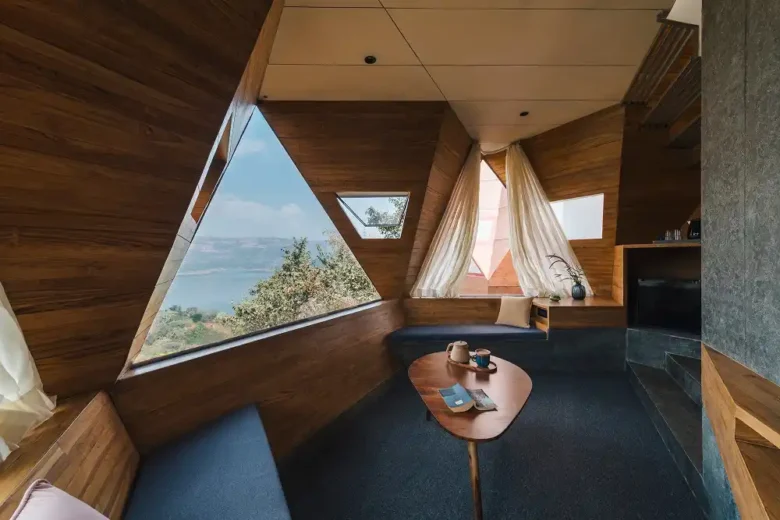
The primary structure was built from steel and assembled entirely by local craftsmen. During construction, bamboo scaffolding reaching heights of nearly 15 meters was used, demonstrating how contemporary architecture can successfully merge with traditional building techniques.
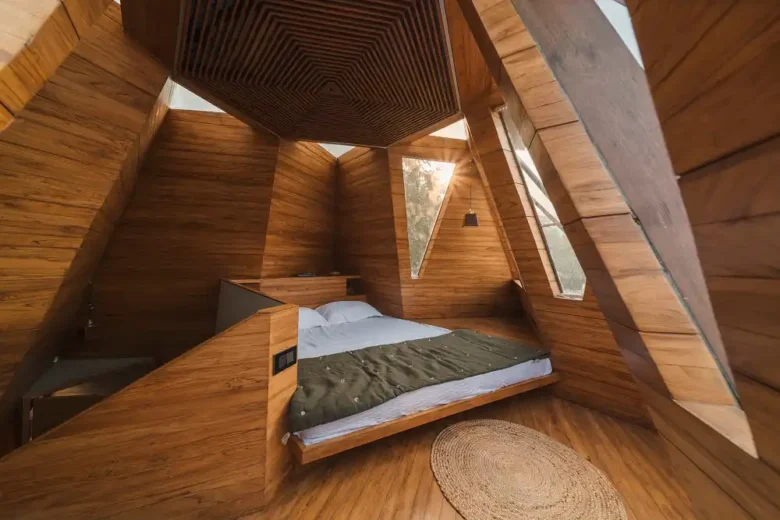
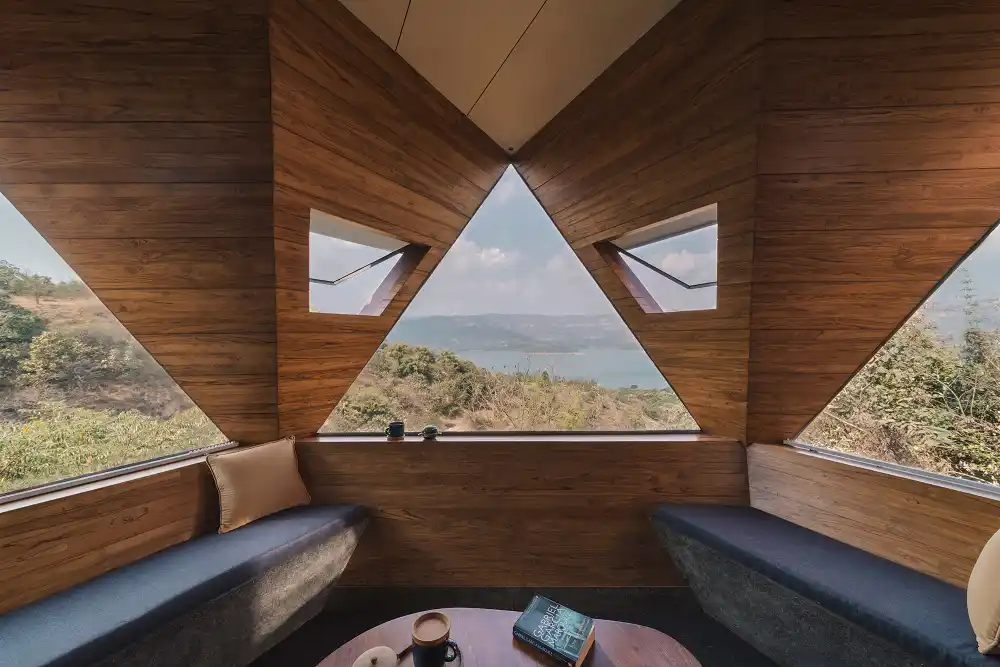
Almost every element of the cabin—including the staircase, windows, skylights, seating areas, jacuzzi, and beds—was custom-designed and fabricated on site. This approach created a cohesive design language in which architecture, furniture, and interior elements are seamlessly integrated.
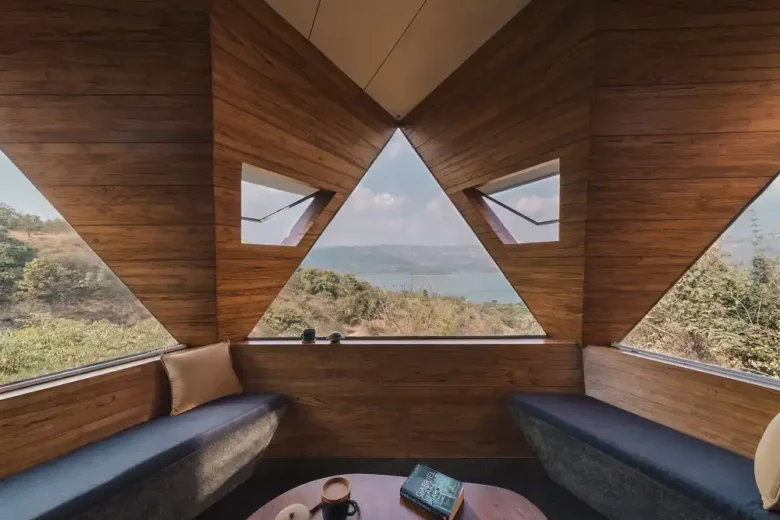
The project reflects PMA madhushala’s ongoing commitment to local craftsmanship, bespoke detailing, and context-sensitive architecture.
An Immersive Experience Inspired by Fireflies
The word “Jugnoo” means “firefly” in Hindi, and the project takes its inspiration directly from this enchanting creature.
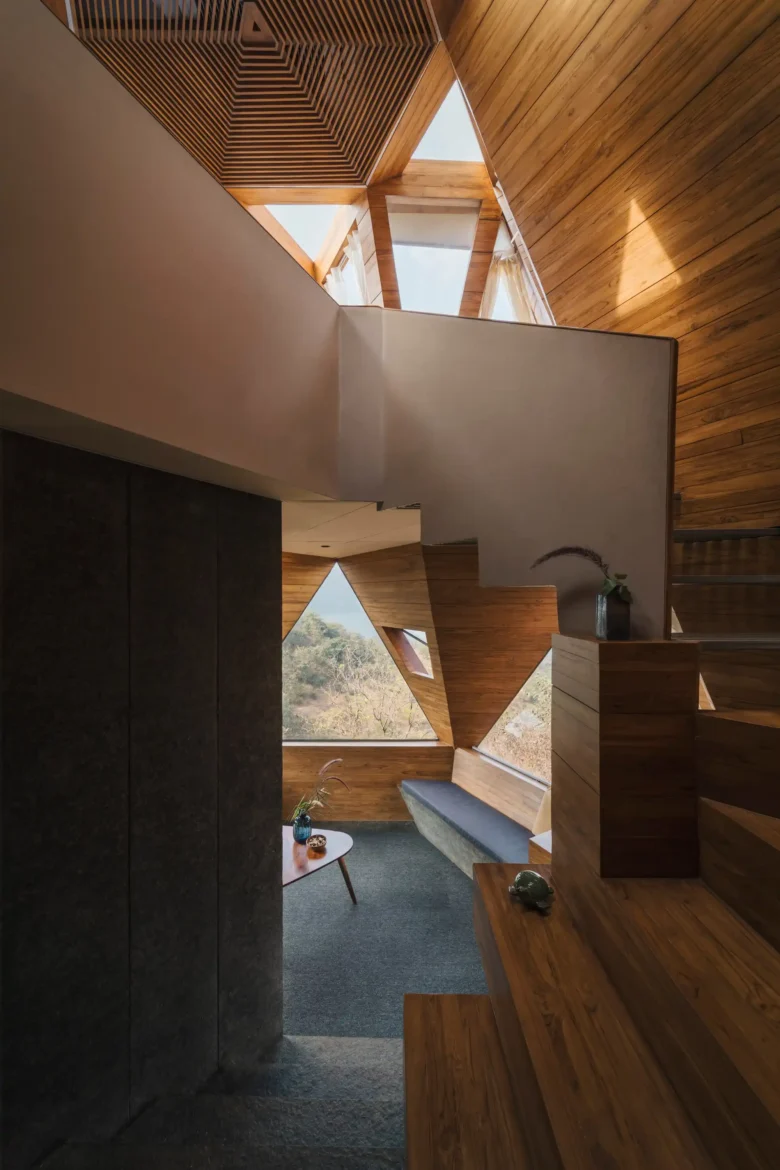
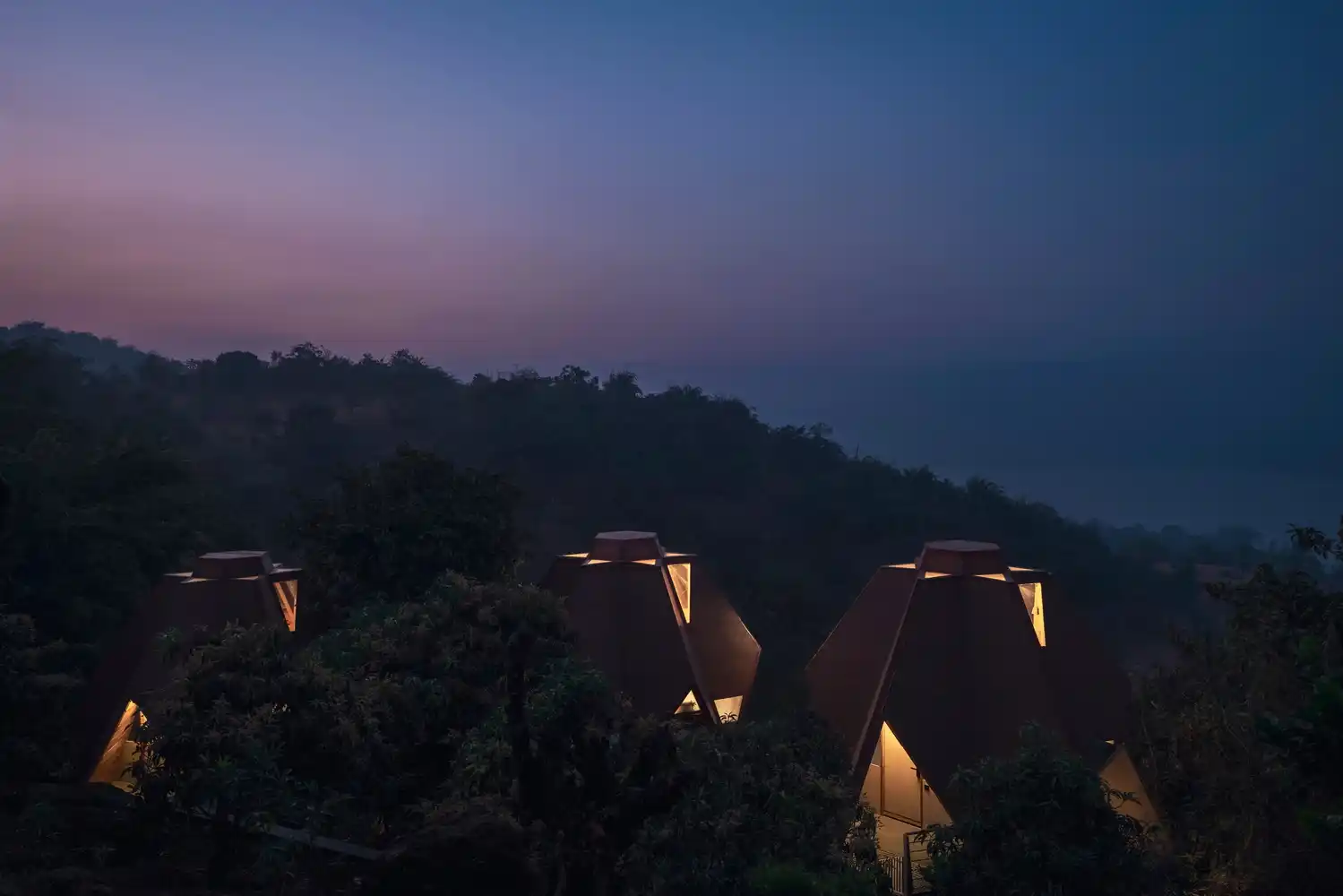
Visitors reach the cabins through elevated pathways winding through the forest canopy. As night falls, the warm glow emanating from the interiors creates the impression of fireflies hovering across the valley, giving the project its magical atmosphere.
Large operable windows provide natural ventilation, reducing the need for mechanical cooling while strengthening the connection between the occupants and the surrounding landscape. A centrally located climate control system ensures comfort within the compact interior volume.
More than just an unusual geometric structure, Jugnoo Cabin stands out as an inspiring example of contemporary hospitality architecture—combining environmental sensitivity, handcrafted construction, and an unforgettable experience immersed in nature.